
Moving to Canada is exciting, but the real challenge often starts after you arrive: building routines, handling paperwork, and understanding how daily life works. This guide focuses on practical steps that make your first weeks smoother, without getting into the immigration process itself. Many newcomers find it helpful to keep a checklist and tackle one category at a time, especially if you are also coordinating services with a provider such as Canadian Visa Expert while planning your move.
Set up your phone, banking, and address fast
Your first week is all about becoming reachable and “official” in day-to-day systems.
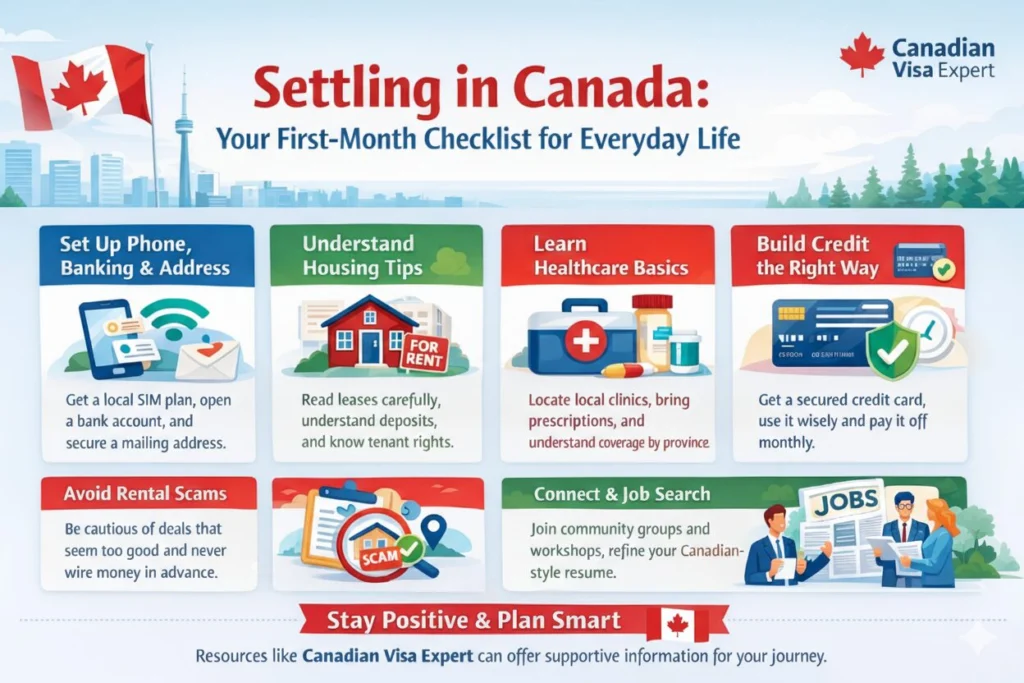
Start with a local phone plan. In Canada, mobile service can be expensive, so compare offers carefully and look for “newcomer” or “bring-your-own-device” plans. Having a Canadian phone number helps with apartment applications, job calls, and setting up accounts. If you can, choose a plan that includes enough data for navigation and video calls with family.
Next, handle banking. A Canadian bank account makes rent payments, salary deposits, and bill management much easier. Most major banks offer newcomer packages that can reduce fees and make it simpler to start building a banking history. Keep your passport and key documents ready for the appointment. If you do not have a permanent address yet, ask what proof of address options are accepted during your first weeks.
Then think about your mailing address. Canada relies on mail for many official notices, banking correspondence, and deliveries. If you are in temporary housing, ask whether mail is accepted and secure. If not, consider using a trusted family address or a mailbox service until you settle.
Understand housing and your tenant rights
Housing can feel unfamiliar, and costs vary widely between cities. The key is to approach rentals with a mix of caution and confidence.
Read leases carefully and confirm what is included: heat, water, electricity, Internet, parking, and laundry. Ask about move-in requirements such as first and last month rent and any deposits that are legally allowed in your province. Take photos the day you move in and keep written notes about any pre-existing damage to avoid confusion later.
Be alert for common rental scams. If a listing looks too cheap for the area, the landlord refuses to show the unit, or they pressure you to wire money, step back. Use reputable platforms and verify identities when possible.
Get smart about healthcare, prescriptions, and walk-in clinics
Canada’s healthcare system is a major advantage, but it can take time to understand. While coverage rules differ by province, you can still prepare.
Bring prescription details and consider obtaining a short supply before travel. Identify nearby walk-in clinics and pharmacies early, even if you feel fine. In many places, people use walk-in clinics for non-emergency issues, and pharmacies can often provide advice for minor concerns.
Also, learn how emergency services work in your city. Save key numbers and the address of the closest hospital in your phone. It is a simple step that reduces stress if something unexpected happens.
Build credit history the right way
Credit in Canada matters for renting, phone contracts, and sometimes even employment checks. The good news is you can start responsibly.
A secured credit card or a newcomer credit card can help you begin building a credit history. Use it for small monthly purchases and pay it off on time. Keep utilization low and avoid applying for many credit products at once. Credit building is not about speed, it is about consistency.
Find community and accelerate your job search
Even if you already have work lined up, community is what makes Canada feel like home.
Look for local newcomer centers, libraries, and community groups. Libraries in Canada often offer free workshops, resume help, language support, and networking events. Professional meetups and industry groups can also help you understand local expectations and expand your connections.
When preparing for the job market, adjust your resume to Canadian norms and focus on clear results, not long descriptions. Reach out to people for informational chats, not only job requests. Many opportunities start as simple conversations.
And if you are coordinating multiple moving parts, keeping a simple planning document can help you stay organized, whether you are working independently or using support resources like Canadian Visa Expert during your broader relocation planning.